No More Weeping Woman: Why I’ll Never Teach Picasso in My Classroom Again.
Emma McVittie
Abstract:
In this paper, I present a feminist critique of the continued valorisation of Pablo Picasso within Visual Arts Education. His status as a foundational figure in modern art, while notable, overshadows his documented history of misogyny and abuse towards women, in particular, his muses and partners, a topic rarely addressed in classrooms. Without a critical examination of Pablo Picasso’s life, art educators risk reinforcing a patriarchal narrative, normalising the silencing and objectification of women. I write this paper to argue the urgent need to implement a feminist approach to the visual arts curriculum. One that rejects the idea of a solitary male genius, and instead, amplifying the stories, relationships, the problematic muse trope, as well as alternative figures in art history in an effort to challenge the default inclusion of Picasso in visual arts curriculums, calling for more ethical and inclusive pedagogical approaches.
Key Words: feminist pedagogy, art history, Pablo Picasso, muse, curriculum, reform, visual arts education.
Introduction: A Beautifully Painted Betrayal
Pablo Picasso, the so-called “Father of Cubism” is a name synonymous with artistic innovation and remains firmly embedded within visual arts curriculum as an unchallenged fixture of the Western art historical canon. His works are omnipresent in textbooks, assessments, and gallery walls; his influence, it seems, is unquestioned. What is not embedded, however, is his troubling personal historyone fuelled by misogyny, psychological abuse, and the manipulation of the women closest to him.
I write this paper as a feminist visual arts educator to challenge this legacy. I contend that teaching Picasso without critical engagement perpetuates what I call a beautifully painted betrayal, a betrayal of the real role women have played in both art and society. To uphold Picasso as a genius while erasing or romanticising his treatment of women is to teach our students complicity.
In what follows, I examine the implications of teaching Picasso through an uncritical lens, framing this discourse through feminist pedagogy and post structural critiques of power in curriculum design (hooks, 1994; Weedon, 1997). By removing Picasso as a central figure, we make room for more ethical and diverse representations, particularly of women, artists of colour, and non-Western voices. Women’s contributions to the arts must no longer be treated as footnotes to the male-dominated canon. They deserve to be authors of the curriculum, not simply muses in someone else’s story.
Picasso, Power, and the Women Behind the Work.
Like many, I was taught to revere Picasso, hearing his name spoken in my classroom during my formative years by teachers seemed to hold an almost sacred weight to this modernist genius. Also, like many, I admired his ability to break apart form and space, reinventing how we see the world through abstraction. What I wasn’t taught was the cost of that genius. There was never made mention of the broken relationships, the women left behind, the damage of mental and emotional abuse inflicted behind closed doors, shadows of his so-called brilliance. Françoise Gilot (1964), in her first-person account of being both an artist, and a partner to Picasso, noted, “He [Picasso] never wanted to share the spotlight. The women in his life had to remain in the shadows of his genius.” Reduced to mere footnotes, the pedestal we placed him upon remained unexamined, and undisrupted.
Once I began my own journey as a visual arts educator, I used a more critical lens to investigate his personal life, particularly from Dora Maar and Françoise Gilot. Gilot, as mentioned above, who was in her own right a respected artist, also wrote that Picasso, “used people around him…like a battery” (Gilot & Lake, 1964). The famous “Weeping Woman” muse Maar found herself publicly humiliated and supposedly institutionalised based on Picasso’s continued portrayal of her being a living depiction of the pain and suffering experienced by everyday society (Pound 2019), eventually causing her to withdraw from the world. These two women weren’t difficult relationships; they were part of deeply imbalanced power dynamics where their suffering was romanticised for male acclaim.
What became most unsettling for me, was how easily this narrative absorbs itself into the classroom, and how we, as educators, therefore become complicit in the retelling of the same story, a story, that is not neutral. A story that reinforces the idea that artistic genius excuses abuse, that while a man is permitted to suffer for his art, those around him become collateral, forgotten in the celebration of his brilliance. This narrative also speaks to the existence of women as muses to only inspire, not to create. This is not a message I want my students, especially my female students, to ever inherit. It is unethical to teach Picasso without this context. Art history upholds a model that celebrates violence dressed in brushstrokes, sending the message that a man’s legacy matters more than the lives he damages along the way. When we, as female educators choose silence, whose voices are being protected and whose pains are being ignored?
Fracturing the Canon: The Myth of the Male Genius Versus Feminist Voices.
I should make it clear, I do not deny Picasso’s influence on Modern art, but by choosing not to teach Picasso, I also refuse to accept the uncriticised glorification of that influence. At no time should influence come at the expense of a woman’s dignity and voice. I am not the first who calls to question the pedestal Picasso stands upon; and with gratitude, I stand upon the shoulders of feminist scholars and artists who have long been disrupting the way we are taught to see Art History.
Linda Nochlin, in 1971, iconically questioned: Why have there been no great women artists? The answer isn’t that women lack the talent, but that the structures of the art world itself, education, access, recognition etc, historically excluded them. This critique of Nochlin’s exposed the illusion that to be great at art is a natural, individual phenomenon. As Nochlin (1971) wrote, “The myth of the Great Artist…is the single most potent ideological justification for the exclusion of women.” This myth Nochlin speaks of perfectly embodies the narrative of Picasso and his continued domination in our classrooms.
In 1973, Carol Duncan further analysed how early modernist painters, including Picasso, managed to construct masculinity and power through their visual representations of women. Duncan’s work Virility and Domination highlights how women were painted not as people, but as trophies of control, reduced to symbols of male conquest. We celebrate works like The Weeping Woman but fail to address the harm that inspired them, we therefore risk teaching our students to separate the image from the impact, aestheticizing abuse.
A feminist analysis in art history is not about moralising, but making visible the difference, the power and the structure that has been hidden. This is what Griselda Pollock reminds us through her work Vision and Difference (1988) where she allowed me to see that choosing to not teach Picasso isn’t in fact erasure, instead, it’s resistance; it’s been given the autonomy to choose what we amplify in a world where still, women aren’t framed as makers, but still as muses.
In 2023, Hannah Gadsby co-curated the exhibition It’s Pablo-matic: Picasso According to Hannah Gadsby. This exhibition spotlighted this discourse into a contemporary public eye. The cleverly curated exhibition place women artists alongside Picasso’s, not in tribute to him, but as a confrontation. Gadsby argued how it is now time to stop hiding behind genius, “We let monsters reach their potential because we love the art more than the people.” (Gadsby, 2023).
The Women Who Made the Work, but Not the History: Marginalising the Muse
“Muse” within an art classroom carries a romantic reverence conjuring images of graceful inspiration and beauty beyond the canvas. In Greek Mythology, the Muses were nine goddesses, each empowering inspiration for the creation of literature, science and the arts. Once seen as divine sources of power, representing the forces of creativity and intellect, the term “Muse” has slowly become diluted, distorted and recast to create a new narrative (Kivy, 2001). Where it once held divine reverence and power, art history watered-down the concept of the muse to signify passiveness, someone looked at, not someone who creates. Muses in modern Western art is almost always a woman, romanticised as the emotional and physical fuel for male creativity. She loses all value when it comes to her intellect or artistry, instead she is to be interpreted, controlled, and turned into art. This shift frustrates me, a shift from goddess to an object of creative inspiration which I believe reflects the patriarchal structures of the art world, where women lose their agency over their own expression and instead are rendered into mere subjects (Nochlin, 1981; Pollock, 1988).
Picasso didn’t have muses. He had women, women who were complex, intelligent and creative, women whose identities continued to be fractured to fuel his work. Before meeting Picasso, Dora Maar was a Surrealist photographer, as well as being actively politically engaged and independently creative. Her entanglement with Picasso inspired many of his artworks, most notably, The Weeping Woman. As their relationship deteriorated to its end, Picasso obsessively painted her anguish, her grief being turned into a motif. Maar did not endorse or appreciate the way Picasso depicted her grief within his works stating, “all portraits of me are lies. They’re Picassos. Not one is Dora Maar” (Pound, 2019). Umland & Elderfield (2006) describe this stylised suffering through the unravelling of her emotions under his control enduring still in galleries, where her own voice is muted.
Françoise Gilot also was an artist who is best known not for her paintings, but for “Life with Picasso” (Gilot & Lake, 1964) a memoir where she writes of the psychological cruelty of Picasso’s compulsive need for dominance. Gilot, memorialised as the only woman who dared leave Picasso outweighs her contributions to post-war French Painting.
Marie-Therese Walter met Picasso at a mere 17, and her softness became the sensual muse of his Le Reve (The Dream) era, a period in the early 1930s where sweeping curved brushstrokes and vivid uses of colour symbolised an overt eroticism. Despite being married to Olga Khokhlova, a ballet dancer who herself experienced the harshness of subject-turned-spectacle, and who was eventually discarded by Picasso when she no longer inspired him (Spies, 1992), Picasso’s secret relationship with Marie-Therese produced one of his most famous portraits Le Reve (1932). While Picasso was celebrated for his series being his most “passionate” and creative, we must remember that it was also built on the exploitation of a teenager, hidden from public view, revealing much about power, secrecy and consent, but yet is praised in the art world for the painting’s dreamlike qualities, where a young woman’s youth and vulnerability were romanticised through the uses of colour and form, her autonomy becoming absorbed into the myth of the male genius. The affair eventually ended as it had begun, in secret. Walter, once known as Picasso’s “golden muse”, was discarded at age 31, mother to his child, and died by suicide not long after Picasso’s death.
It’s evidently clear that these women shaped Picasso’s work, but they are overshadowed, names tethered to his artistic genius, systemically erased. Nochlin (1971) made heed to the structures upholding the myth of the male artist are also erasing the labour, ideas and influence of women. Being called a muse is not a compliment, instead it’s a cage, containment limiting the woman to show she is seen.
When teaching visual arts, rather than just identifying the muse, we should be questioning our students, asking them about who she is, what did she sacrifice? What was taken from her? What works of her do we never get to see because she is merely a subject of another? We cannot continue to romanticise this silence, to move beyond the gaze, we need to reclaim the stories of these women, inviting and questioning the myths they so unjustly inherited.
Who We Teach, What We Tolerate – Re-Writing the Curriculum.
Each time Pablo Picasso is placed into an art unit, a textbook chapter, or a student research task, a choice is being made. This isn’t just us simply teaching Cubism or Modernism, this is us teaching which artists deserve our attention, whose stories we wish to share and who we choose to forgive for their grievances. Art education luckily doesn’t exist in a vacuum; it is mirrored by the values we as teachers pass down, often uncritically, through repetition; if we continue to teach and celebrate Picasso, without nuance or context, we risk teaching tolerance of brilliance built upon harm. Yes curriculum is never neutral. As educators, we have a responsibility to interrogate these inherited structures. Traditionally, Western visual arts education has been built upon the assumption that to be great is in art, is synonymous with male genius. This leaves little room for women, artists of colour, and non-western perspectives. If we continue to keep Picasso up on his pedestal, what are we actually saying about the many equally innovative artists work which we leave out?
This tension isn’t abstract for me, it plays out in my own classroom. Our curriculum teaches Picasso and Cubism to Year 8 students. It’s an extremely popular unit. Students learn about Picasso’s style, create a series of distorted faces, and complete a clay mask inspired by Cubist aesthetics. They love it. They laugh at the strange eyes, twisted mouths and loopy faces. The element of play and being able to break the rules to embrace absurdity draws them in. And I understand that. Student enjoyment and creative freedom is important to me, I’ve always valued it, but over time, I’ve come to feel increasingly uneasy. What troubles me most, is that while we encourage students to experiment with Picasso’s style, there is rarely an invitation to interrogate its origins, contexts or the man behind it all. Are we essentially teaching them to celebrate form without questioning its foundation? The women whose faces were fractured in Picasso’s canvases weren’t loopy faces, twisted mouths and strange eyes, they were real people, many who suffered under his coercive control. The fact that my students feel joy while distorting faces sits uneasily beside the historical reality behind Dora Maar’s breakdown or Marie-Therese’s erasure. What complicates this further is that Picasso is one of the few artists my students already know by name. He carries cultural weight. His recognisability gives the unit a sense of legitimacy and excitement that is hard to replicate. Despite our best efforts to introduce students to contemporary female and First Nations artists throughout the year, the Picasso unit consistently emerges as their favourite. The familiarity of the name, the visual impact, and structured creativity it allows works in its favour. And so, for the sake of student engagement, the unit continues. This is where the conflict lies. Do we preserve a popular unit that students enjoy, knowing that is rests on an unchallenged legacy of harm? Or do we take a pedagogical risk of replacing it with something more ethical, but less recognisable? These are questions that keep me up at night, that make me question my own values as a feminist educator, “am I doing my students wrong, or am I letting these women down?” because when curriculum is driven by familiarity rather than integrity, we become complicit in reproducing the very systems we wish to dismantle.
If I am faced with teaching this unit again, I will no longer teach Picasso. The mask can stay. The distortions can stay. But the myth of the male genius must go. There are countless other artists whose names my students deserve to know. Anyone else by Picasso. I am fortunate to work in a school where leadership supports critical, ethical approaches to curriculum design. I know that any changes I will make will be backed by trust in my professional judgement. And importantly, I will continue to meet syllabus expectations. The pedagogy can evolve. The learning can deepen.
Refusal as Pedagogy – Teaching as Ethical Resistance
Erasure doesn’t mean to refuse. It doesn’t mean to cancel. It is to be given the opportunity to choose differently. To teach differently. The classroom space and curriculum are not neutral. Within this context, to refuse is an act of feminist pedagogy allowing ways of teaching that prioritise ethics over ease, and accountability over tradition.
My refusal to teach Picasso isn’t about putting blinders on and pretending he didn’t exist. It’s about recognising that continuing to place him on this pedestal, unchallenged and without context, perpetuates a canon built on silence. The mythology of the male genius is upheld, even when the cost of that genius came at the expense of others. It tells our students that technical brilliance is more important than the human cost, rewarding power, not principle. Feminist pedagogy invites us to teach without whole selves, our values, our discomforts, our questions urging us to hold room for contradiction and to interrogate what we have inherited to reshape and pass on. Bell hooks (1994) reminds us that, “education as the practice of freedom” requires vulnerability, to be critical and to commit to justice. For me, refusing Picasso is not a rejection of art history, It’s my invitation to expand it. Within my own classroom, this refusal has become an act of care. Care for the women whose stories have been overshadowed. Care for my students who deserve to see that artists don’t have to be problematic to be powerful. Care for my own integrity as a teacher who wants to model not just creativity, but courage.
I do not believe the canon is fixed. I believe it is made, again and again by what we as educators are choosing to teach, to honour, and to elevate. I believe we can make it better. We can teach Cubism without Picasso. We can explore abstraction without erasure. We can let our students play with form without absorbing the harm of the figures defining it.
Refusal isn’t closing something down, it’s a radical opening making room for different artists, different stories and different possibilities by pushing back against the weight of tradition. We can do more. We can do better. We will do better.
Afterword: Why This List Matters
This list of alternative artists is a response, not just a resource. This list represents my commitment to teaching Visual Arts in a way that celebrates innovation without excusing harm. Every name on this list reflects an artist who has challenged form, identity, power, or history. Each without the reliance on the exploitation or silencing of others.
In loosening his group on the classroom, I’m not seeking to erase Picasso from history. Instead, we have the opportunity now to shift out focus to artists who history has overlooked, marginalised, or erased. It’s time we open the door to richer and more inclusive conversations. These artists deserve to be known by my students, and not due to their visual impact, but because of the amount of integrity and multiplicity they breing to the canon.
Lastly, this list reminds me that curriculum is not fixed, it’s a living thing that as educators, we have the power to shape in ways that align with both our values, while also challenging inherited silences. In making this list, I am not only refusing Picasso, I am choosing something more.
“Anyone Else but Picasso”
These artists offer strong curriculum alignment and ethical integrity—while allowing students to explore abstraction, portraiture, and distortion in meaningful, inclusive ways:
Cubist or Formal Innovators
Georges Braque – Co-founder of Cubism. Often sidelined behind Picasso, but equally revolutionary in form and space.
Marie Laurencin – A Cubist painter often excluded from the canon. Soft colour palettes and abstracted female subjects.
Sonia Delaunay – Abstract painter and textile designer. Strong use of rhythm, repetition, and colour theory.
Expressive / Symbolic / Fragmented Portraiture
Käthe Kollwitz – German expressionist, focused on emotional, distorted human forms and social issues.
Frida Kahlo – Iconic for her symbolic, surreal self-portraits. Layered use of distortion, personal identity, and pain.
Ben Quilty – Australian contemporary artist. Expressive, thick paint application; faces distorted to convey trauma, masculinity, and vulnerability.
George Condo – American artist with Picasso-inspired distortions—but reimagines them through parody and psychological fragmentation.
Del Kathryn Barton – Australian artist. Layered, stylised portraiture; strong on identity, symbolism, and female agency.
First Nations and Decolonial Perspectives
Vincent Namatjira – Arrernte artist. Portraiture as satire and power critique; distorted style, bold colour, political commentary.
Kaylene Whiskey – Pitjantjatjara artist. Flattened space, humour, and pop culture references to reframe Indigenous presence.
Emily Kame Kngwarreye – Abstract compositions tied to Country, law, and ancestral presence.
Playful & Student-Friendly Artists
Yayoi Kusama – Repetition, abstraction, and surreal play; strong connections to mental health and personal symbolism.
Keith Haring – Symbolic, energetic linework. Social commentary through flattened, stylised human figures.
Yinka Shonibare CBE – Uses mannequins and masks; explores colonial identity and historical distortion.
Afterword: Let them Be Seen.
Here are their names, their stories, and in many cases, their own work.
Dora Maar (1907–1997)
Who she was: A Surrealist photographer and poet.
Erased as: The Weeping Woman.
Legacy: Maar was an established artist before Picasso. Her darkroom experimentation, photomontage, and political consciousness made her a key figure in 1930s Paris. After their relationship ended, she withdrew from the art world, long haunted by how her image was manipulated.
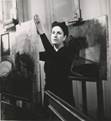
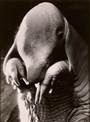
Portrait of Ubu (1936) Maar Working in her studio
Françoise Gilot (1921–2023)
Who she was: Painter, author, and the only woman to leave Picasso.
Erased as: The woman who “betrayed” Picasso by publishing Life with Picasso.
Legacy: Gilot had a significant painting career in both France and the U.S., with work influenced by mythology, abstraction, and spirituality. Her memoir exposed Picasso’s controlling behaviour and is a landmark feminist document.
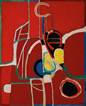
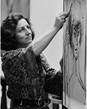
Labyrinth Series Gilot working in her studio
Marie-Thérèse Walter (1909–1977)
Who she was: Picasso’s teenage lover, mother of his child.
Erased as: Dreamlike muse of Le Rêve (1932).
Legacy: Often romanticised for her youth and curves, Walter’s life was largely defined by silence. She died by suicide four years after Picasso’s death, her life reduced to soft lines and pastel tones in his work.
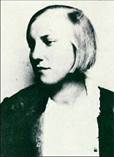
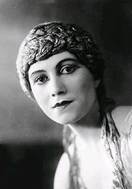
Olga Khokhlova (1891–1955)
Who she was: Ballets Russes dancer, Picasso’s first wife.
Erased as: The “difficult wife” who wouldn’t conform.
Legacy: A disciplined, successful performer who gave up her career for Picasso. He depicted her in a classical style before turning toward increasingly fragmented portrayals as their marriage deteriorated.
References:
Weedon, C. (1997). Feminist practice and poststructuralist theory (2nd ed.). Blackwell.
hooks, b. (1994). Teaching to transgress: Education as the practice of freedom. Routledge.
Brown, M. (2023, June 6). Françoise Gilot, French painter and muse of Picasso, dies aged 101. The Guardian.
Chadwick, W. (2012). Women, art, and society (5th ed.). Thames & Hudson.
Duncan, C. (1973). Virility and domination in early twentieth-century vanguard painting. Artforum, 12(3), 30–39.
Gadsby, H. (2023). It’s Pablo-matic: Picasso according to Hannah Gadsby [Exhibition]. Brooklyn Museum.
Gilot, F., & Lake, C. (1964). Life with Picasso. McGraw-Hill.
hooks, b. (1994). Teaching to transgress: Education as the practice of freedom. Routledge.
Jones, J. (2019, December 27). Dora Maar’s Portrait of Ubu – a soft-skinned alien with eye stalks and testicles. The Guardian.
Kivy, P. (2001). The performance of reading: An essay in the philosophy of literature. Blackwell.
Madelaine. (2023, February 2). Françoise Gilot and her Labyrinth Series. Medium.
Nochlin, L. (1971). Why have there been no great women artists? Art News, 69(9), 22–39, 67–71.
Pollock, G. (1988). Vision and difference: Feminism, femininity and the histories of art. Routledge.
Pound, C. (2019, June 7). Why Dora Maar is much more than Picasso’s ‘weeping woman’. BBC Culture.
Spies, W. (1992). Picasso and Marie-Thérèse: L’amour fou. Prestel.
Sud Ouest. (2022, October 9). Marie-Thérèse Walter, la muse répudiée de Picasso.
Tate. (n.d.).. Seven things to know about Dora Maar. Tate.
Umland, A., & Elderfield, J. (2006). Picasso and American art. The Museum of Modern Art
Wikiwand. (n.d.). Olga Khokhlova [Photograph]. Wikiwand.
 Cultivating Creativity: Best Practices for the Art Classroom
Leave a comment