This week, 50,000 QTU members walked off the job for a 24-hour strike.
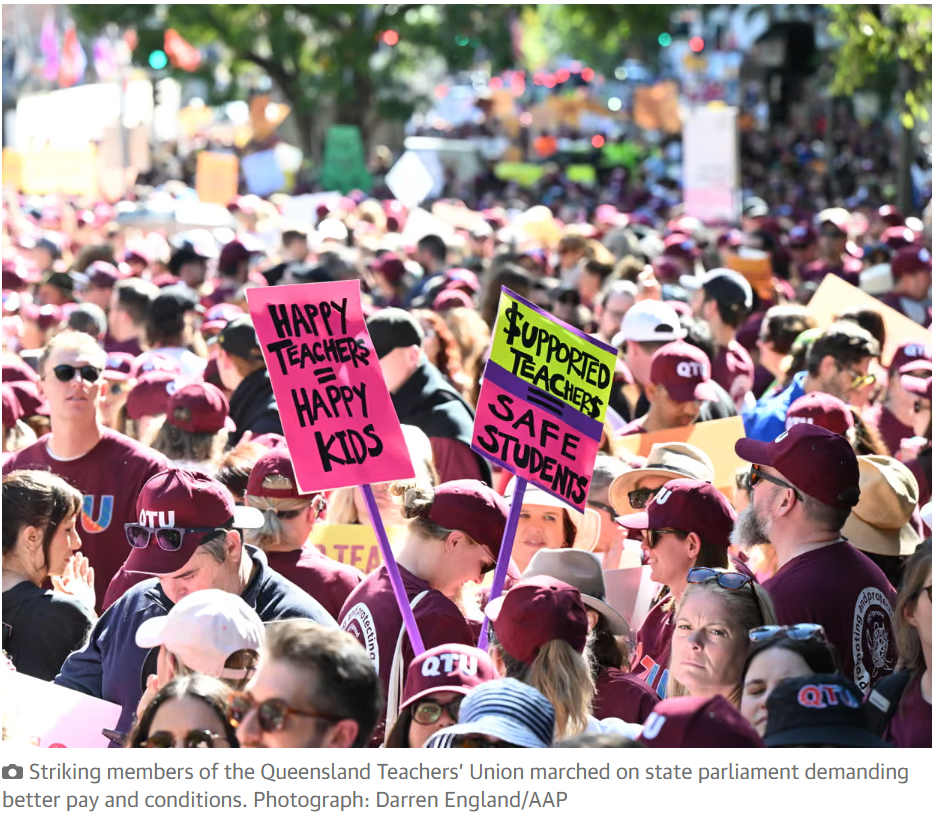
The media and parts of the public responded in a sadly predictable way:
“Teachers whinging about wages when they get weekends and holidays off.”
Social media blew up. I did what many teachers do, I scrolled. And as I scrolled, I sank. Deeper and deeper into a rabbit hole of vitriol in the comment sections, filled with misconceptions and casual cruelty. The sheer amount of disrespect for our profession is exhausting. It’s often coming from people who’ve never taught a day in their lives, drawing on their own or their parents’ outdated schooling experiences.
It actually breaks my heart to see how many students I teach carry these intergenerational perceptions. I’ve taught kids who openly say, “My dad says teachers don’t know anything,” or “Mum reckons school was a waste of time.” And honestly? I get it. I had some horrendous schooling experiences myself.
I teach Visual Arts, and yet, the subject I was treated the worst in was Visual Arts.
My art teacher made me feel small, and told me I’d never make it.
My Year 12 Maths teacher told me, verbatim: “English couldn’t possibly be your first language because you are so ret****d.”
And in Year 2, I was physically shaken by a teacher for not lining up quickly enough.
But instead of letting that trauma turn me against education, I let it fuel me.
I became the teacher I needed back then. My pedagogy is simple: every student deserves to feel safe, seen, and capable. That’s my non-negotiable.
But let’s be honest. The disrespect?
It’s suffocating.
And it has to stop.
Did you know?
- Over 70% of educators report frequent burnout
- 60% have experienced threats or actual violence
- More than 40% of teachers are considering leaving the profession in the next five years
(Riley et al., 2021; McLean Davies et al., 2022)
It’s no mystery why.
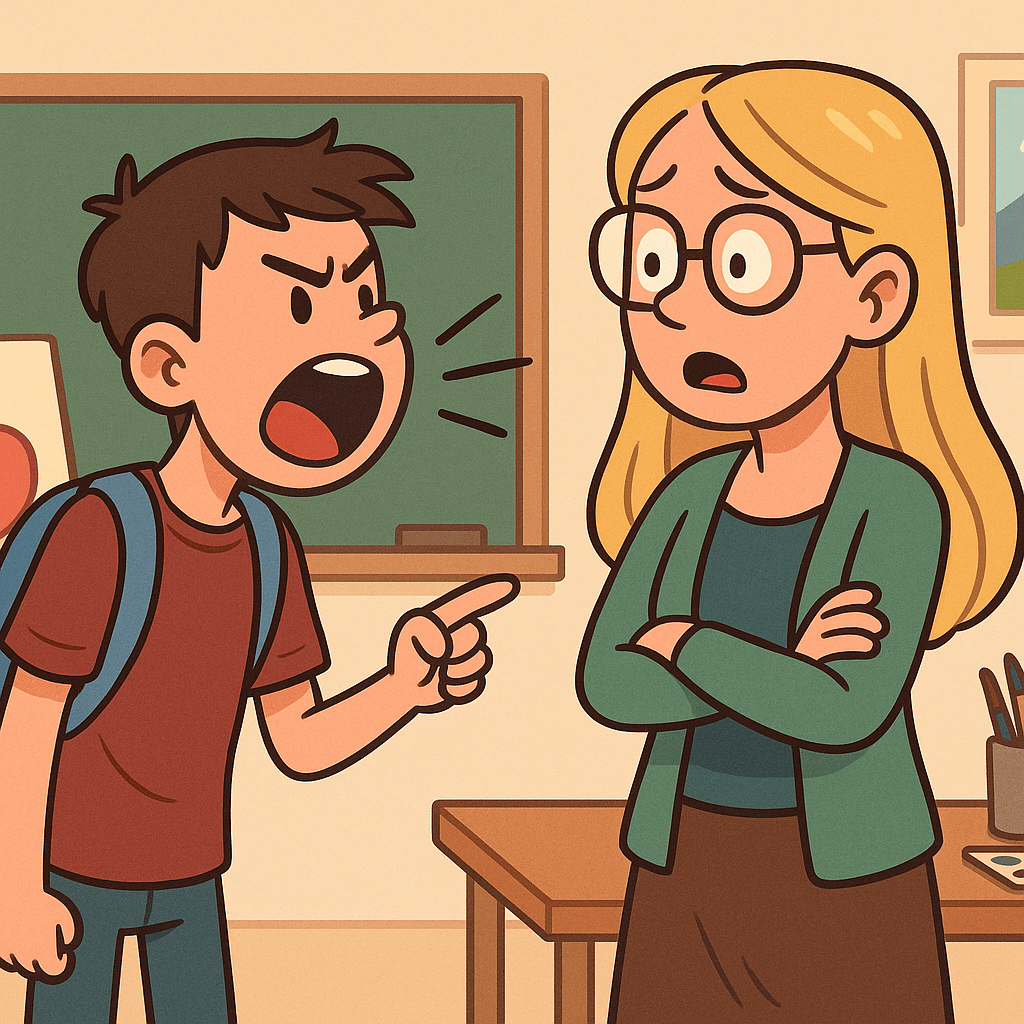
I’m verbally abused 2–3 times a day, on a good day.
Yes, my school is supportive and responsive. Yes, behaviour is logged. But it is constant.
The first time a student swore at me, I was shocked.
Now it’s routine:
“Shut up.”
“You’re stupid.”
“I’m not listening to you.”
Or the classic… just ignoring me completely.
The Invisible Work No One Sees
Let’s break this down.
Here’s what I do before I even meet a new class of 28 (Junior) students and up to 20 (Senior) students:
- Check academic records to adjust support
- Review behaviour and attendance logs to prepare differentiated strategies
- Consider students with disabilities, trauma backgrounds, or disengagement patterns
- Modify classwork and assessments
- Upload digital resources
- Monitor parent emails (which are often aggressive if not answered within 24 hours)
Then, every lesson, I respond to students’ moods, emotional states, and crises while also delivering curriculum. And I do this in a 25-hour paid work week.
Oh, did I mention I do this for FIVE different classes?
Spoiler alert: Teachers don’t work 25 hours a week.
We work nights, weekends, and holidays, because the job demands it. Because we care.
And does University prepare us for this? Nope…I had zero idea entering the workforce.
Phone Bans Aren’t Magic Wands
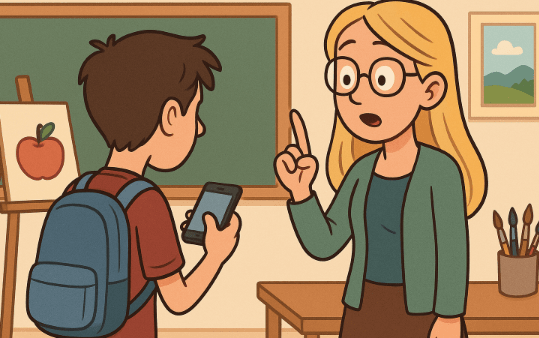
The Queensland Government implemented a phone ban (Queensland Government, 2023), which we support. But many students don’t comply.
Because they add to the slow erosion of a teacher’s spirit.
Why Teachers Are Walking
It’s not just about pay.
It’s about respect, conditions, and burnout.
It’s about a profession where emotional labour is unpaid, abuse is expected, and weekends are just extensions of the school week.
It’s about being told we “get too many holidays” while planning lessons, contacting families, and marking until midnight.
What I Wish People Knew
If you’ve never taught a class, never been responsible for 150+ students’ learning, wellbeing, trauma management, curriculum delivery, parent communication, reporting and behaviour management, please don’t tell me I get “too many holidays.”
Instead, I invite you, genuinely, to join us.
Do the degree.
Do the prac.
Do the job.
Get those weekends and holidays for yourself.
But I promise you, if you do, you’ll be writing a blog post like this one someday too.
I Still Believe
Despite all this, I still love teaching.
I still believe that art can change a student’s life.
I still believe in making a classroom where kids feel safe, heard, and inspired.
And I believe in community.
So, if you’re reading this and you’re a parent, community member, or past student:
Back your teachers.
Ask how you can help.
Speak with us, not against us.
Because when you respect your child’s teacher,
you’re showing your child how to respect themselves.
References
McLean Davies, L., Groves, O., & Reid, J.-A. (2022). Understanding and supporting teacher wellbeing in Australia. University of Melbourne.
Queensland Government. (2023). Mobile phones and devices in Queensland state schools. https://education.qld.gov.au/initiatives-and-strategies/parent-and-community-engagement/mobile-phones
Riley, P., See, B. H., Marsh, H., & Badham, B. (2021). The Australian principal occupational health, safety and wellbeing survey 2021. Australian Catholic University.


Leave a Reply