
Maybe it is because journals already play such a large role in my teaching practice and personal life, but keeping a research journal has been a huge turning point and source of support throughout my postgraduate study.
I am now showcasing my Master of Education and Professional Studies research journal. She has worked hard and is currently in rest mode while I begin a new journal for my Master of Philosophy research.
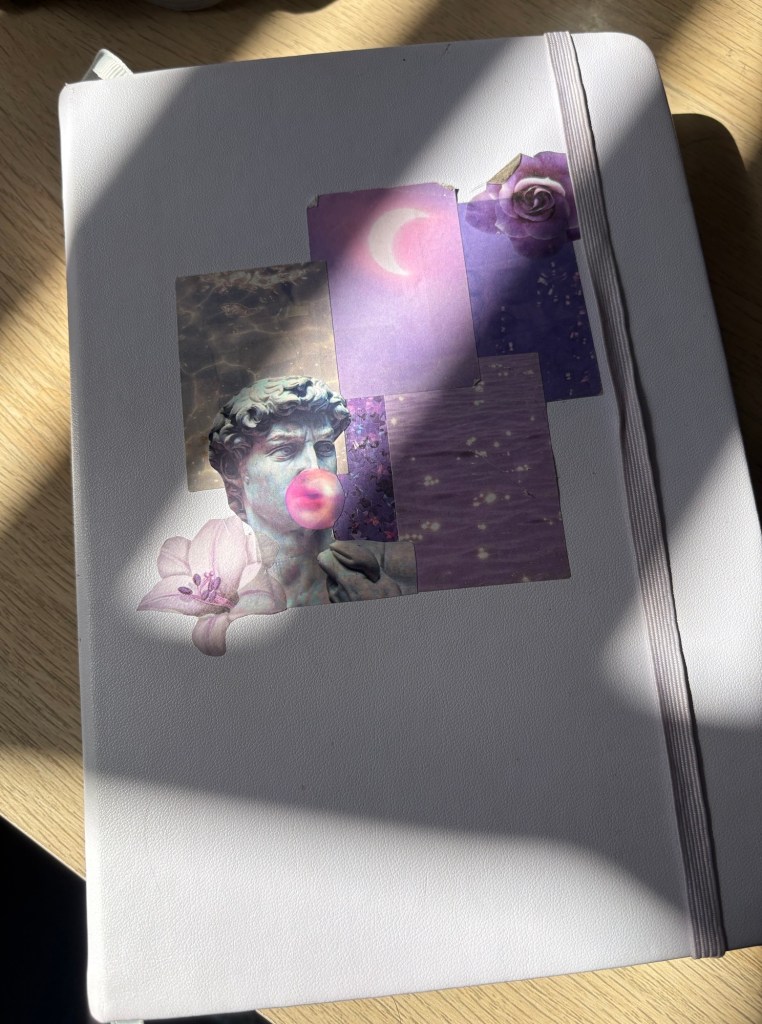
The first thing to know is that you do not need anything expensive. This journal was a notebook I bought from Kmart for around $4, and I simply made it pretty with some stickers.
So, what does a research journal actually entail?
Beginning the Research Journey
I started my journal by writing down my intentions for the research journey, alongside the very first research question I developed. As the journal progressed, that research question changed many times, which is, of course, a very normal part of the research process.
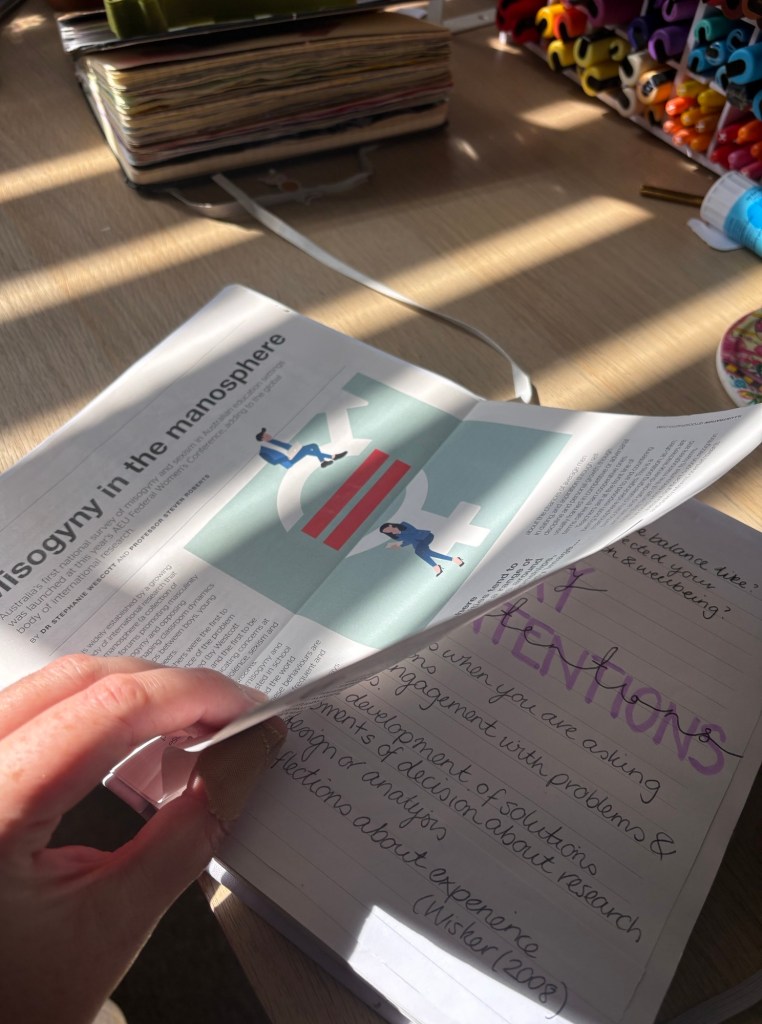
I also collected artefacts, articles, images and other materials that interested me along the way and glued them into the journal. This created a visual record of my developing ideas and gave me an accessible collection of references that I could return to later.
Recording Supervisor Meetings
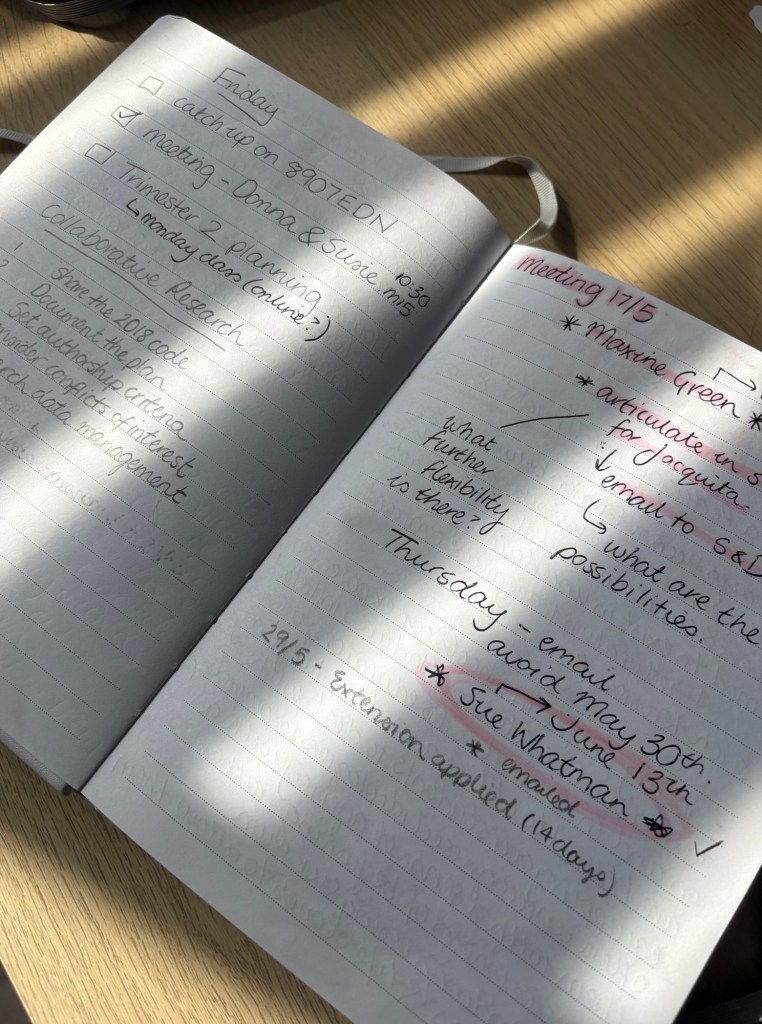
Every meeting I had with my supervisors was recorded in the journal. I dated each entry and annotated the notes with actions, questions and items I needed to follow up.
Having all my supervisor meeting notes in one place helped immensely. Rather than searching through emails, loose pages or separate documents, I could easily return to previous discussions and track how my research was developing over time.
Exploring Key Concepts
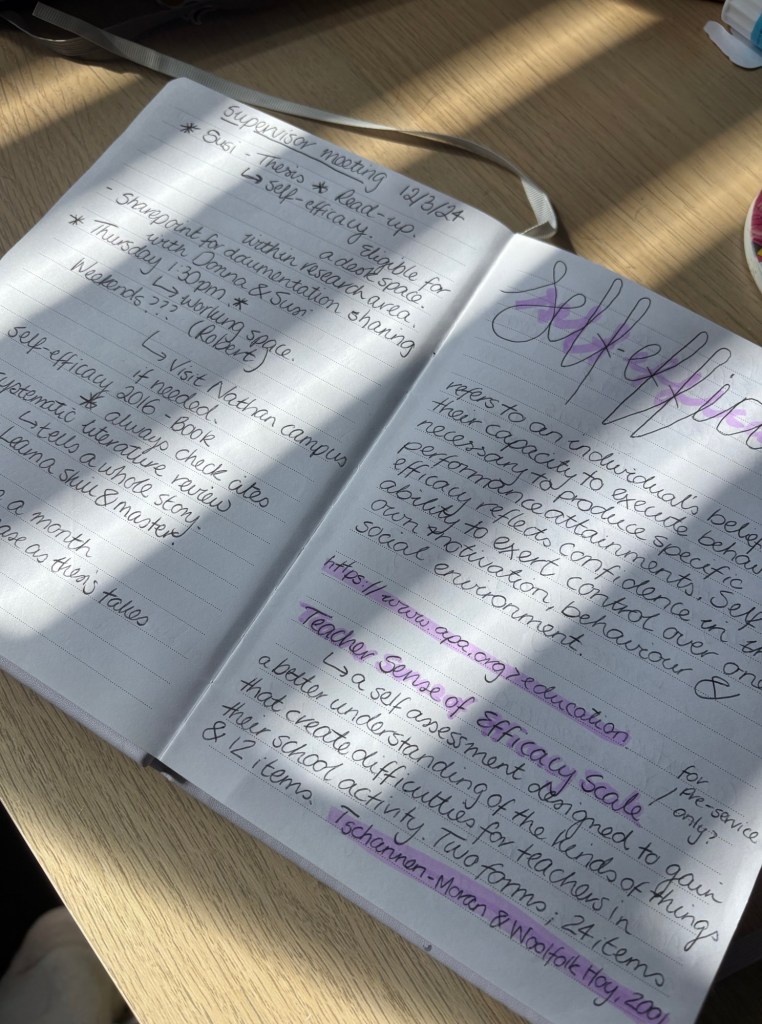
I also dedicated pages to researching important concepts connected to my study.
For example, I created a page exploring self-efficacy, bringing together different definitions and research to develop a thorough understanding of the concept. These pages became useful reference points when I later needed to explain or apply key ideas within my dissertation.
Because my research closely examined the influence of feminist educators and theorists, I also dedicated one or two pages to each key influence. This allowed me to explore their theories, practices and research in greater depth.
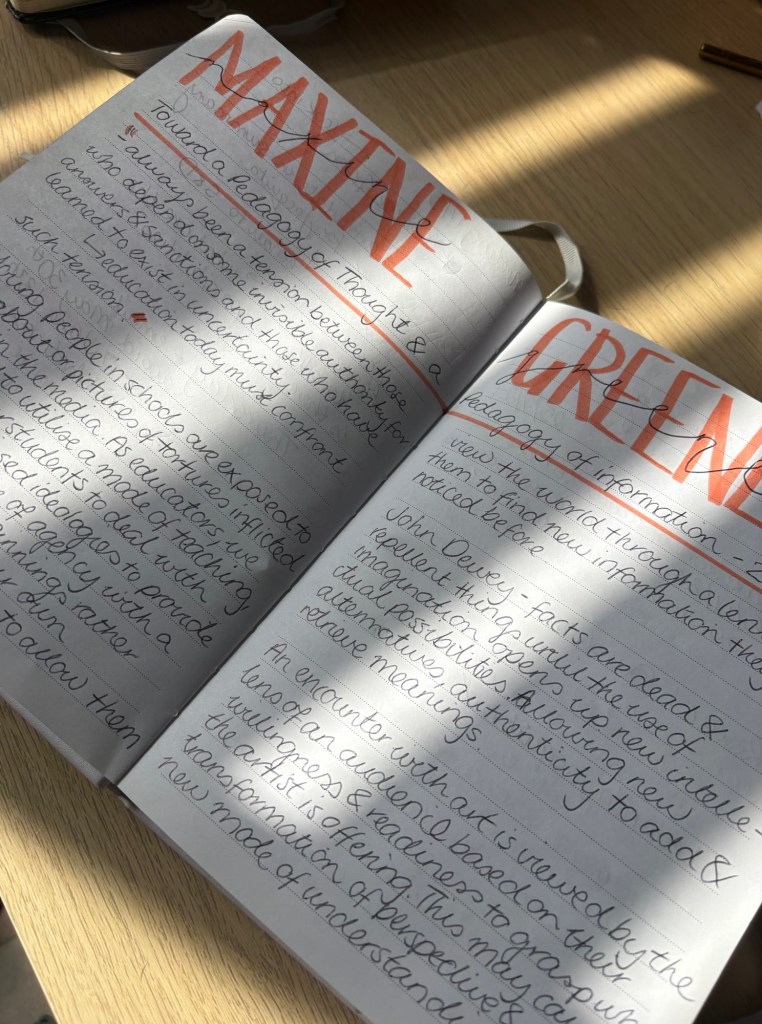
I found this to be an incredibly valuable way of learning more about my theoretical framework. Writing, highlighting, annotating and visually organising the information helped me make stronger connections between the literature and my own study.
Planning and To-Do Lists
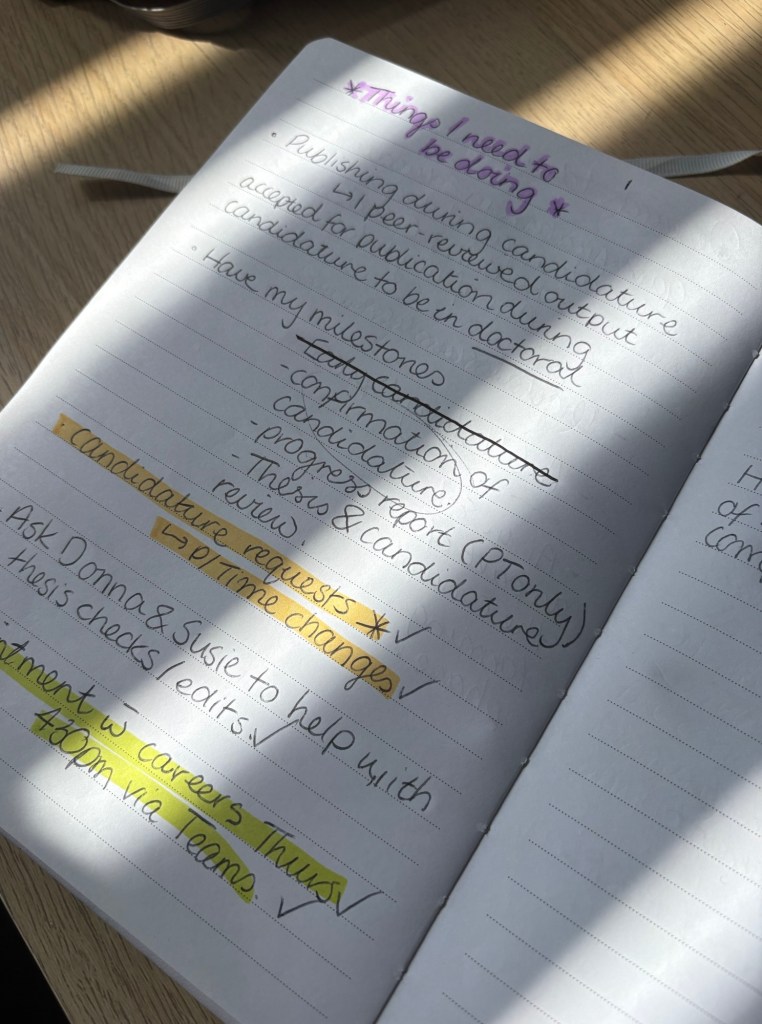
My journal also contains many pages of to-do lists, particularly from the days I dedicated entirely to working on my thesis.
These lists were informed by supervisor meetings, university emails and the different stages of the research process. They helped me identify priorities, organise my time and keep track of the many small tasks that contribute to completing a research degree.
Having these plans written down also gave me a clear starting point each time I sat down to work.
Reflecting on Candidature
An important part of completing a research master’s degree is the candidature process.
I used my journal to record reflections throughout this stage and glued in sections of the formal feedback I received from my candidature examiner. I highlighted and annotated the report, which allowed me to respond thoughtfully and identify the areas of my research that required further development.
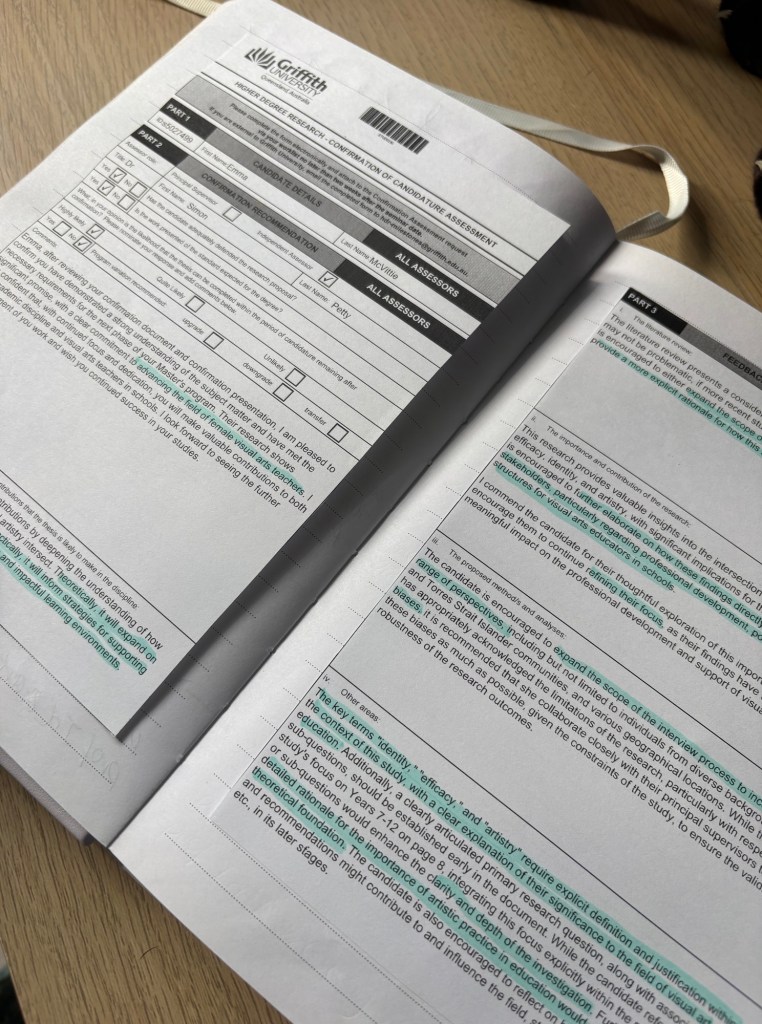
The journal gave me a private space to process feedback, reflect honestly and plan my next steps.
Planning the Dissertation and Analysing Data
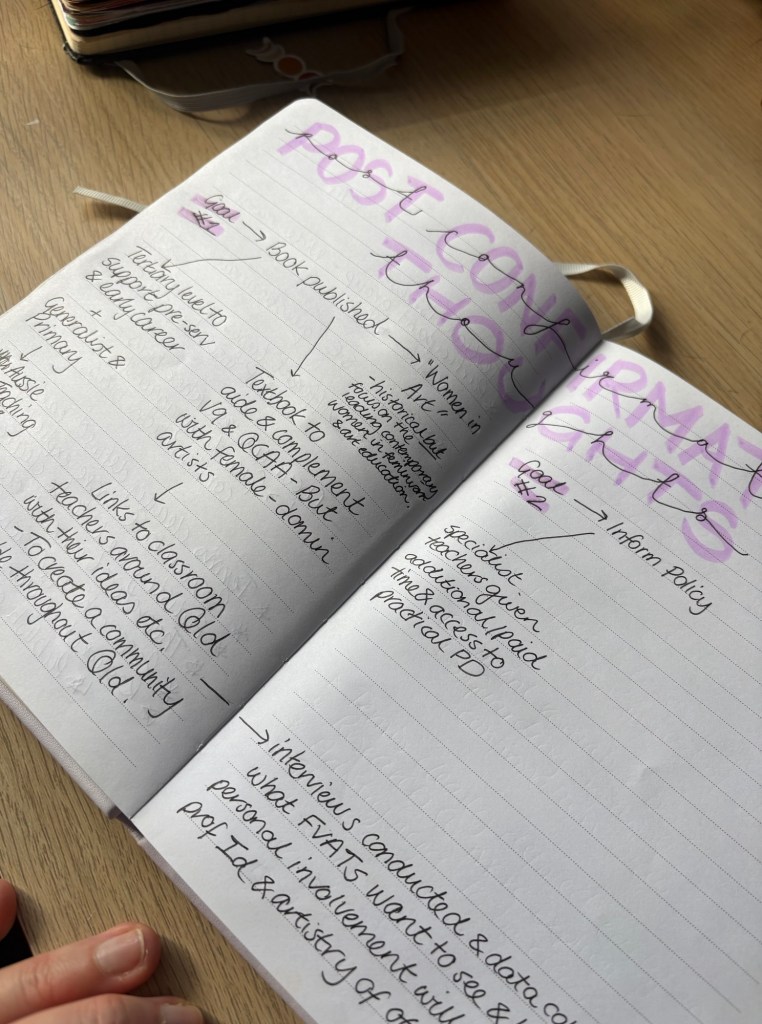
The journal also acted as a soundboard for planning my dissertation.
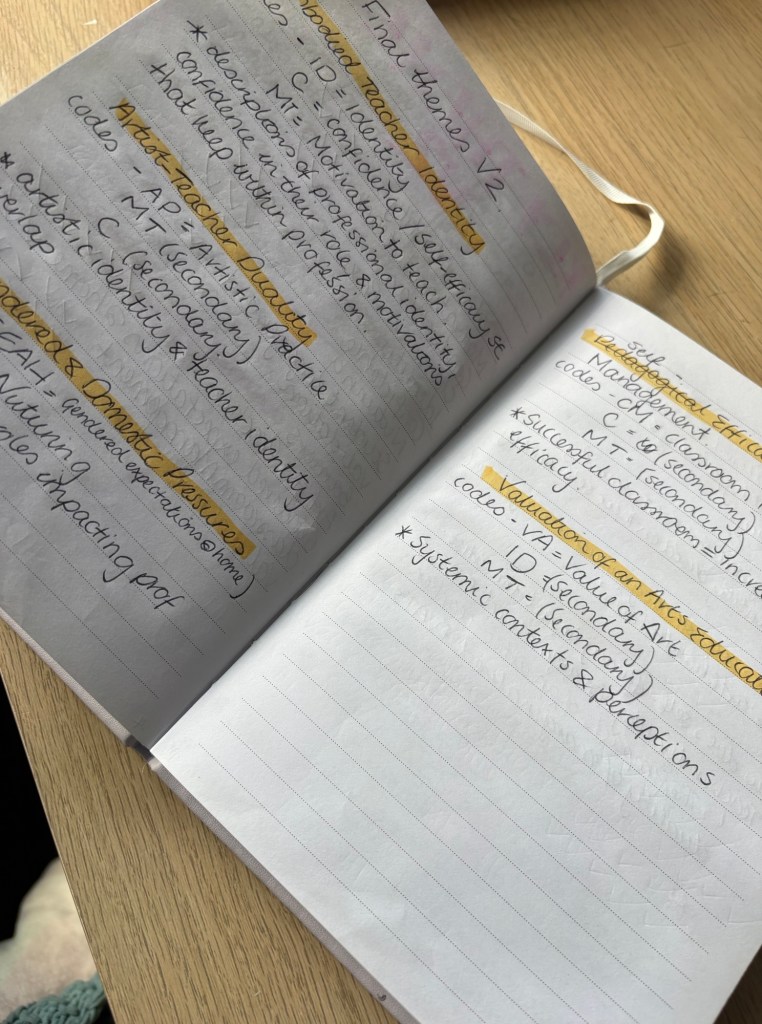
I mapped out chapters, recorded developing ideas and took notes during my thematic analysis. Having these ideas together in one physical space allowed me to see connections that may have been less obvious on a screen.
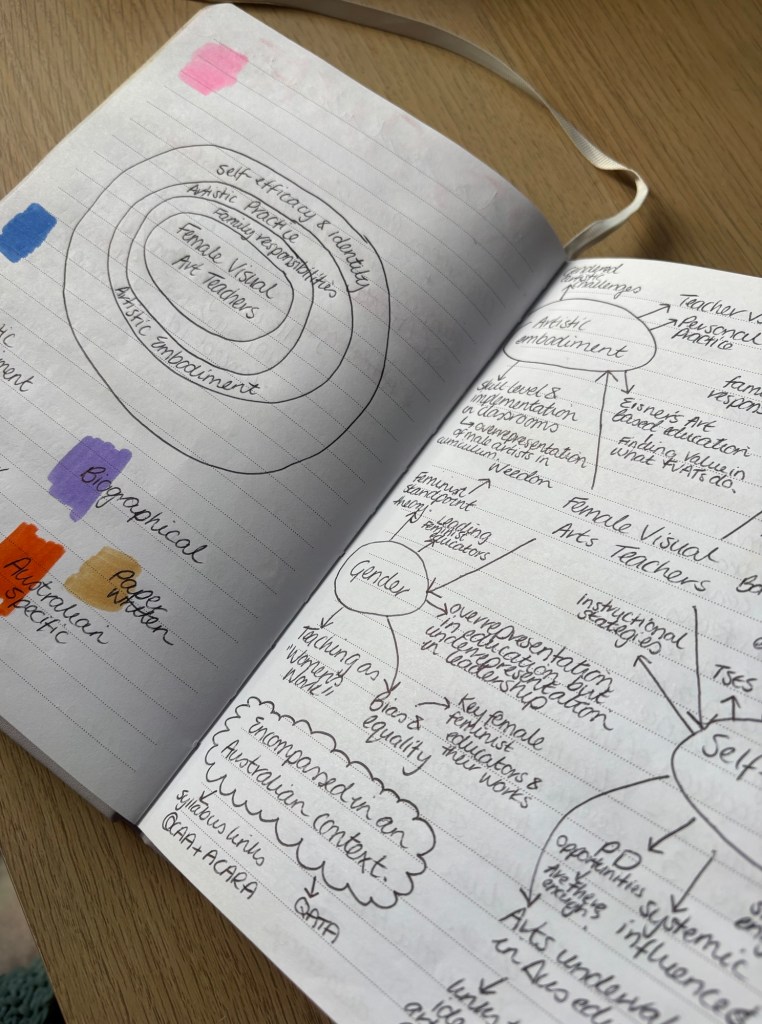
It also meant I could easily photograph pages and include relevant examples within the appendices of my dissertation.
Recording Professional Development
Another part of being a higher degree research student is engaging in professional development and learning experiences.
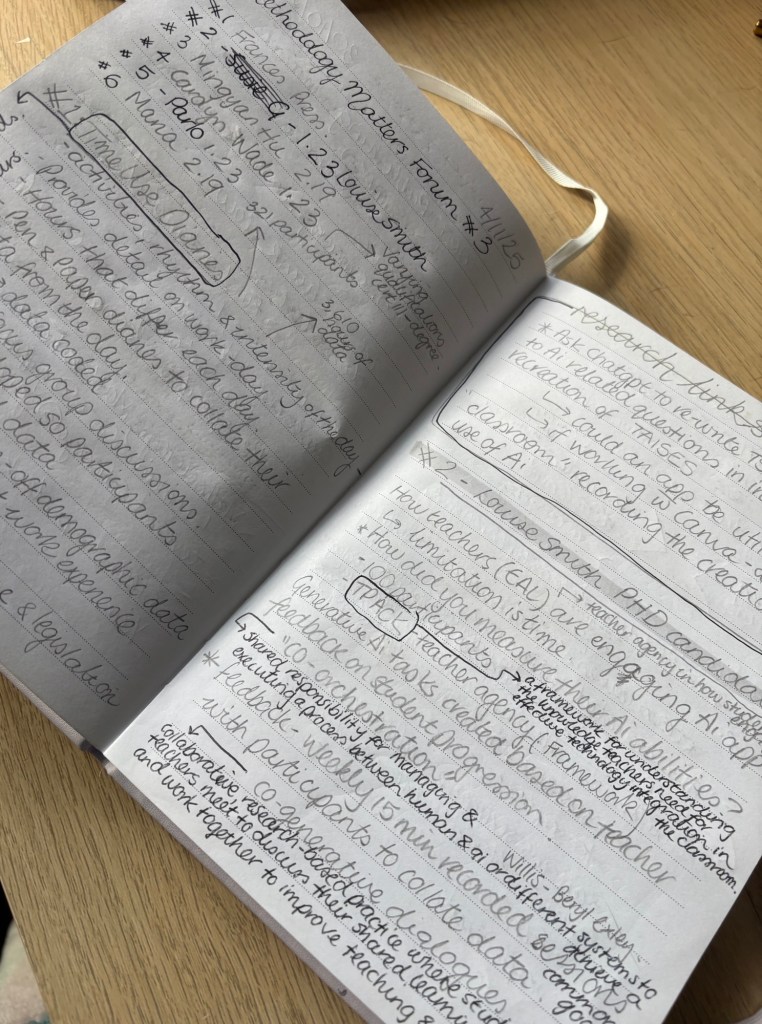
Whenever I attended a workshop, conference or presentation, I took as many notes as possible. Afterwards, I spent time reflecting on the experience, researching unfamiliar terms and annotating my notes to further embed the knowledge.
I would add basic definitions, identify connections between the speakers and my own research, and consider how the learning might influence my future work.
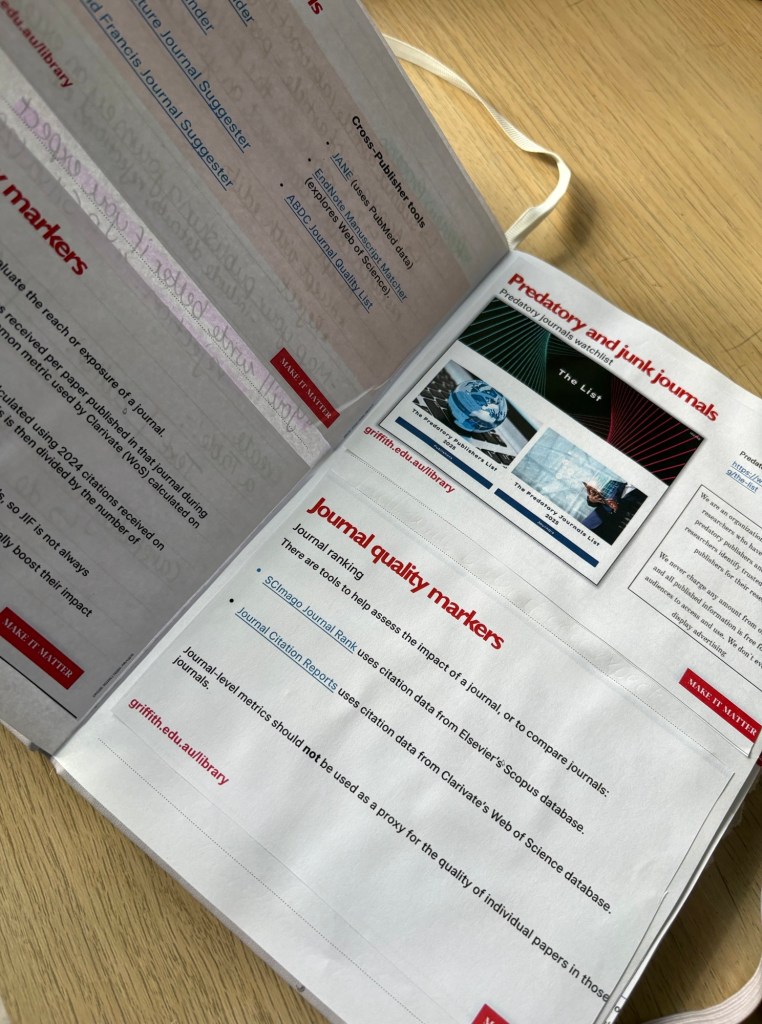
This also included printing and gluing in slides from presentations, particularly when they addressed areas that I knew would become an important focus or that I might want to reference later.
Responding to Examination Feedback
As I came to the end of my degree, I printed and glued in the final examination feedback I received from Reviewers 1 and 2.
I carefully annotated the reports and used the journal to reflect on each comment. As the examination process can require candidates to make amendments to their dissertation, having the complete reports physically available helped me clearly identify what needed to be addressed.
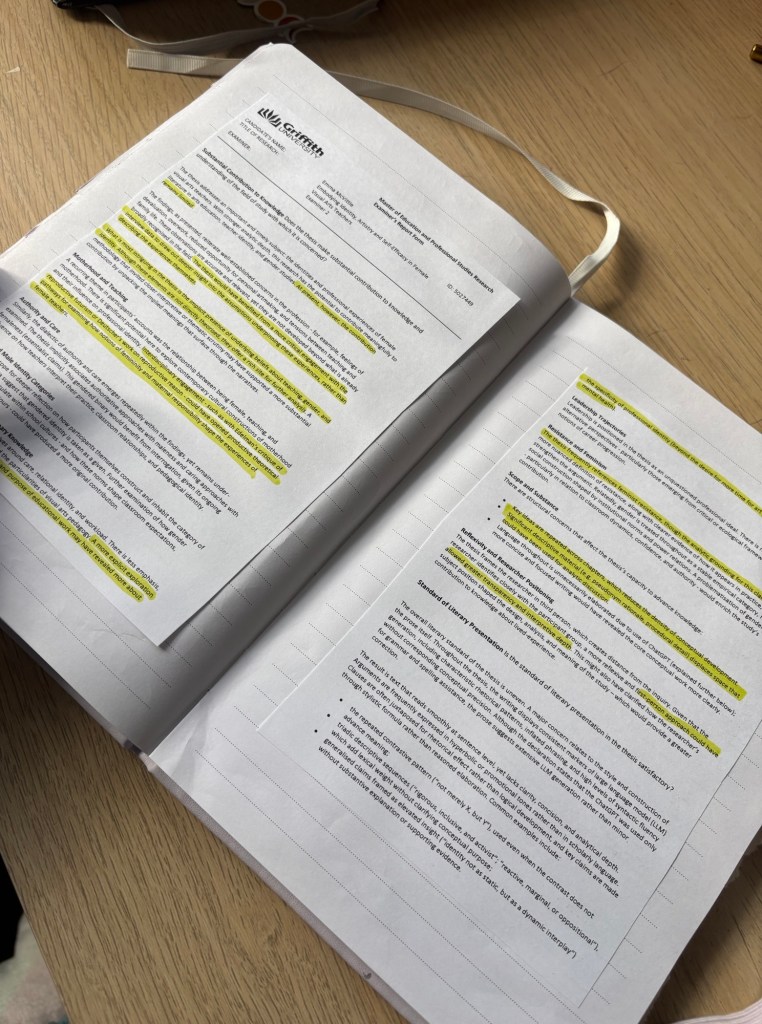
Once again, the journal allowed me to keep everything in one place.
An Artefact of the Journey
This particular journal began its journey with me in 2024 and was completed in July 2026.
She now exists as an artefact of my academic journey. I often return to her when I need to find a reference, revisit an idea or reconnect with the thinking that shaped my research.
I can wholeheartedly recommend keeping a research journal throughout your academic journey. It does not need to be expensive, perfectly organised or beautifully presented. It simply needs to be a space that works for you.
I now have a new journal for the next stage of my research pathway, and she is already beginning to fill with everything I need for this new avenue.



Leave a Reply